Paver Patio vs Concrete Patio Cost Phoenix Arizona
By the Driveway Guides Editorial Team — reviewed for accuracy. Last updated October 2026. This article is for informational purposes and reflects typical market pricing; verify current details with licensed contractors before starting any project.
Paver patios in Phoenix run $10-$30 per square foot against concrete at $8-$15 in 2026. The desert market prices the repair economics the surfaces run.
This guide compares Phoenix paver and concrete patios: installed ranges, heat behavior, and the repair path each surface carries.
paver vs concrete patio phoenix — At a Glance for US
Pavers run $8.0–$30 installed in Phoenix against concrete the lower band anchors. This is a realistic planning number for the United States in 2026, not a marketing low-ball.
| Line Item | Typical Range (USD) | What Drives It |
|---|---|---|
| Concrete patio installed | $8.0–$15 | Desert-mix slab |
| Paver patio installed | $10–$30 | Interlocking stone system |
| Paver base and sand | $2.0–$5.0 | The setting the system runs |
| Sealing either | $0.5–$1.5 | UV protection both want |
Understanding paver vs concrete patio phoenix
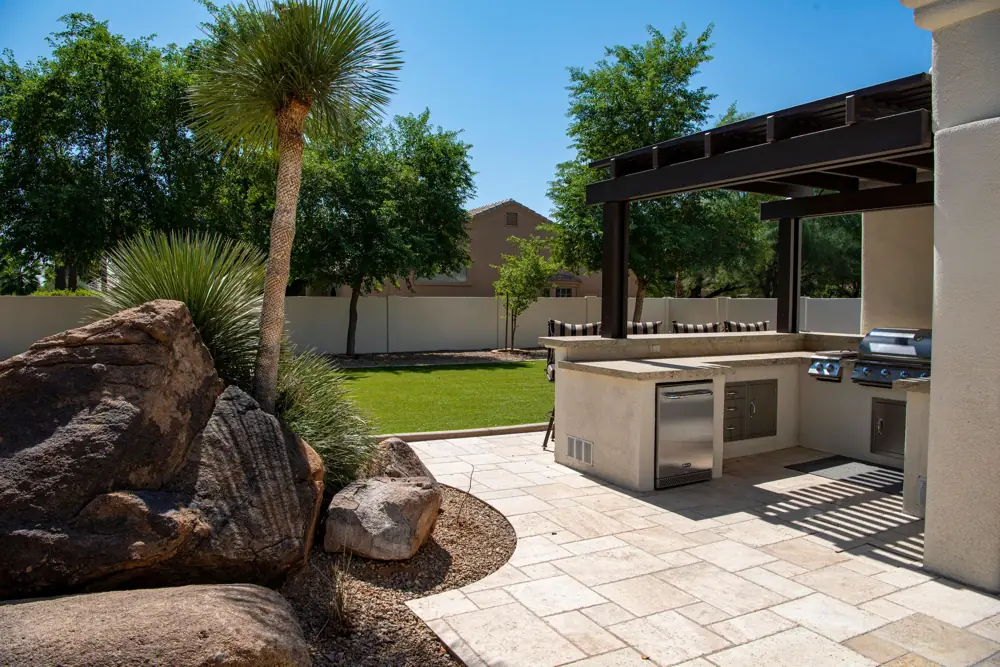
Phoenix sun pushes patio surfaces past 150 degrees. Light pavers and light concrete both reflect; the barefoot hours the color decides.
The paver the cracked unit the $20 swap repairs. The concrete the crack the section the saw-and-replace the $500+ runs. The repair math prices the premium.
What Moves the Price Up or Down
The comparison moves on repair economics, heat, color options, and the base both surfaces share.
| Factor | Cost Impact | Detail |
|---|---|---|
| Repair economics | unit vs section | Paver swap beats concrete cut |
| Surface heat | light colors win | Barefoot the color the writes |
| Color palette | pavers wider | The stone the tones the carries |
| Base work | similar both | The desert the compaction the runs |
Patio Surface Comparison
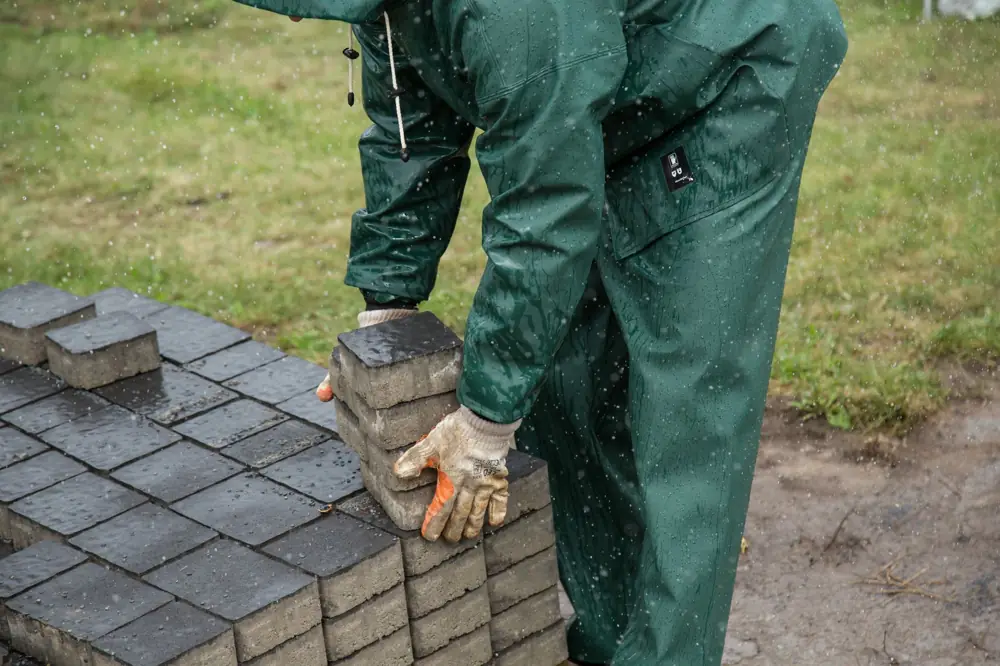
The surfaces the Phoenix market runs:
| Option | Description | Best For | Cost Level |
|---|---|---|---|
| Desert-mix concrete | Light broom slab | Budget and simple | $8-15/sq ft |
| Concrete pavers | The interlocking the entry | The repair-friendly choice | $10-18/sq ft |
| Natural stone pavers | Travertine and flagstone | The premium the desert runs | $18-30/sq ft |
The repair appetite and the aesthetic pick the surface.
Three Realistic Project Scenarios
The concrete family patio — $3,200–$6,000
400 sq ft desert mix.
- Base and pour — $3,200–$6,000
Why this matters: The budget the slab the delivers.
The paver family patio — $4,000–$7,200
400 sq ft concrete pavers.
- Base and bedding — $800–$1,400
- Pavers installed — $3,200–$5,800
Why this matters: The surface the unit repair the decade runs.
The travertine entry — $5,400–$9,000
300 sq ft natural stone.
- Premium base — $900–$1,500
- Travertine — $4,500–$7,500
Why this matters: The desert-luxury the barefoot the cool runs.
The same canvas the materials price apart — the repair math the decade decides.
Sample Budget Breakdown
The table below shows how a typical mid-range budget for paver vs concrete patio phoenix distributes across materials, labor and compliance in the United States. Adjust the percentages to your own scope before using it as a savings target.
| Category | Estimated Amount | Explanation | Optimization Tip |
|---|---|---|---|
| Concrete 400 sq ft | $3,200–$6,000 | desert mix | The sealing the sun demands |
| Pavers 400 sq ft | $4,000–$7,200 | concrete pavers | The sand the joints refresh |
| Travertine 300 sq ft | $5,400–$9,000 | premium stone | The sealer the stone the wants |
Every figure above is an indicative 2026 market range. Final quotes move with site conditions, contractor availability and the exact specification you lock in.
From Quote to Completion: the Typical Timeline
Most paver vs concrete patio phoenix projects follow the same five-stage rhythm. Knowing the calendar before you sign prevents the two classic frustrations — feeling rushed into a deposit, and being surprised by a mid-project gap while materials arrive.
- Permit where required: 1-3 weeks — The zoning setback and the impervious-coverage checks some municipalities run on new flatwork.
- Build: 2-5 days — Poured or paver — the surface placement the crew sizes the patio by; most residential patios finish inside a week.
- Seal and furnish: 1-2 weeks — The sealing the surface wants and the furniture the first season delivers.
- Week 0: layout and quotes — The furniture-driven dimensions and the three itemized quotes; the chalk outline the reality check runs.
- Week 1-2: excavation and base — The dig depth, the aggregate lift, and the compaction passes the freeze-thaw survival runs on.
Smart Ways to Control the Budget
Cost control on paver vs concrete patio phoenix is mostly about scope discipline and timing. These are the strategies that consistently deliver the largest savings:
Check the drainage slope before the pour
Patios need the 1-2% fall away from the house; the re-slope retrofit the missing quarter-inch demands costs 10x the original grading.
Advantages:
- Directly reduces the controllable parts of the quote
- No impact on quality or compliance when scoped correctly
Disadvantages:
- The slope conversation happens before the concrete truck, or never.
- Requires planning lead-time you may not have on urgent timelines
Phase the project across seasons
The base and flatwork this fall, the pergola and screening next spring — the phased budget the cash flow prefers.
Advantages:
- Directly reduces the controllable parts of the quote
- No impact on quality or compliance when scoped correctly
Disadvantages:
- Living with a half-finished yard for a season.
- Requires planning lead-time you may not have on urgent timelines
Price the base once, not twice
The compacted aggregate base carries every patio surface; the $900 base done right the first time prevents the paver reset the shortcut wants in year five.
Advantages:
- Directly reduces the controllable parts of the quote
- No impact on quality or compliance when scoped correctly
Disadvantages:
- Nobody sees the base — the line item the low quote cuts.
- Requires planning lead-time you may not have on urgent timelines
Match the surface to the climate
Freeze markets want air-entrained concrete and polymeric paver sand; the climate-specific spec the local installer already knows.
Advantages:
- Directly reduces the controllable parts of the quote
- No impact on quality or compliance when scoped correctly
Disadvantages:
- The wrong material ships fine — it fails on the third winter.
- Requires planning lead-time you may not have on urgent timelines
Permits, Rules and Safety
Phoenix patios at grade need no permit. A roof or wall added to the patio structure does.
- Setback rules govern patio edges near property lines; the variance the setback violation forces prices in weeks and fees.
- Retaining walls over 3-4 feet want engineering review in most jurisdictions — the stamped drawings the permit desk requires.
- Impervious-coverage caps bind some lots — the zoning math the new patio has to pass.
Maintenance and Long-Term Ownership Costs
The project price is only the first line of the budget. These recurring items are what owners in the United States actually spend money on after the crews leave:
| Task | Frequency | Typical Cost | Why It Matters |
|---|---|---|---|
| Paver reset of lifted units | Every 3-5 years | $200-$500 | The freeze-lifted units the reset levels; the trip hazard the wait creates. |
| Weed control at joints | Seasonal | Free to $100 | The seed the joint gap plants; the maintenance the sand top-up prevents. |
| Polymeric sand top-up | Every 2-4 years | $50-$150 | The paver joints the washout opens; the sand the ants and weeds refuse. |
| Sealing poured or paver surfaces | Every 2-3 years | $300-$600 | The stain and freeze protection the climate demands; the sealer the color keeps. |
The polymeric sand the paver joints the 2-3 year the refresh; the concrete the UV seal the same the calendar the runs.
Frequently Asked Questions
How much do paver patios cost in Phoenix?
$10-$30 per square foot in 2026 — concrete pavers $10-18, natural stone $18-30. The base system anchors the price.
Which surface is cooler in Phoenix?
Light travertine stays coolest underfoot — dense stone resists heat. Light concrete runs second.
Pavers or concrete for repair?
Pavers: a cracked unit swaps for $20 in an afternoon. Concrete needs saw-cut section replacement at $500 or more.
Do pavers increase Phoenix home value?
A travertine patio reads well at appraisal — the premium often recovers at resale.
Summary
Planning paver vs concrete patio phoenix in the United States starts with an honest range — $8.0–$30 for the scenarios most households actually install — then works backwards through repair, heat, and palette arithmetic.
Phoenix patio pricing runs on repair math — the paver unit swap beats the concrete section cut over any decade. Collect at least three itemised quotes, confirm the permit path before signing, and hold a 10–15% contingency for site surprises. Those three habits protect more budget than any product choice.
Related Guides
- Flagstone Patio Installation Cost Per Square Foot Denver Colorado
- Covered Patio Installation Cost vs Pergola San Antonio Texas
- Pergola Material Cost Comparison Wood Vinyl Aluminum Tampa Florida
- Screened Patio Enclosure Cost Pool Cage Orlando Florida
- Gravel Patio Installation DIY vs Pro Cost Austin Texas
- Brick Patio Installation Cost Per Square Foot Philadelphia