Composite Deck vs Wood Deck Cost Comparison Seattle Washington
By the Driveway Guides Editorial Team — reviewed for accuracy. Last updated October 2026. This article is for informational purposes and reflects typical market pricing; verify current details with licensed contractors before starting any project.
Composite decks in Seattle run $30-$60 per square foot against wood at $20-$40 in 2026. The rain city prices the maintenance gap between them.
This guide compares composite and wood decking for Seattle: installed ranges, the moisture each surface fights, and the decade arithmetic.
composite deck vs wood deck cost comparison seattle washington — At a Glance for US
Composite decking runs $20–$60 per square foot in Seattle against wood the lower band carries. This is a realistic planning number for the United States in 2026, not a marketing low-ball.
| Line Item | Typical Range (USD) | What Drives It |
|---|---|---|
| Wood deck installed | $20–$40 | Cedar and pressure-treated pine |
| Composite deck installed | $30–$60 | Capped composite and PVC |
| Annual wood maintenance | $0.5–$1.5 | Cleaning and sealing per year |
| Composite maintenance | $0.05–$0.15 | A wash per year |
Understanding composite deck vs wood deck cost comparison seattle washington
Seattle rain feeds moss, mildew, and rot. Wood decks demand yearly cleaning and sealing here; composite shrugs most of it off.
The composite premium runs 40-60% on install. Over a decade, the wood maintenance the climate demands closes most of the gap.
What Moves the Price Up or Down
Price moves on material tier, framing, height, and the railing package.
| Factor | Cost Impact | Detail |
|---|---|---|
| Material tier | +$15-30/sq ft | Entry composite to premium PVC |
| Framing condition | +$5-15/sq ft | Replace versus reuse the frame |
| Height and rails | +$20-60/ln ft | Elevated decks the guard want |
| Fastener system | +$2-5/sq ft | Hidden clips the composite wants |
Decking Options
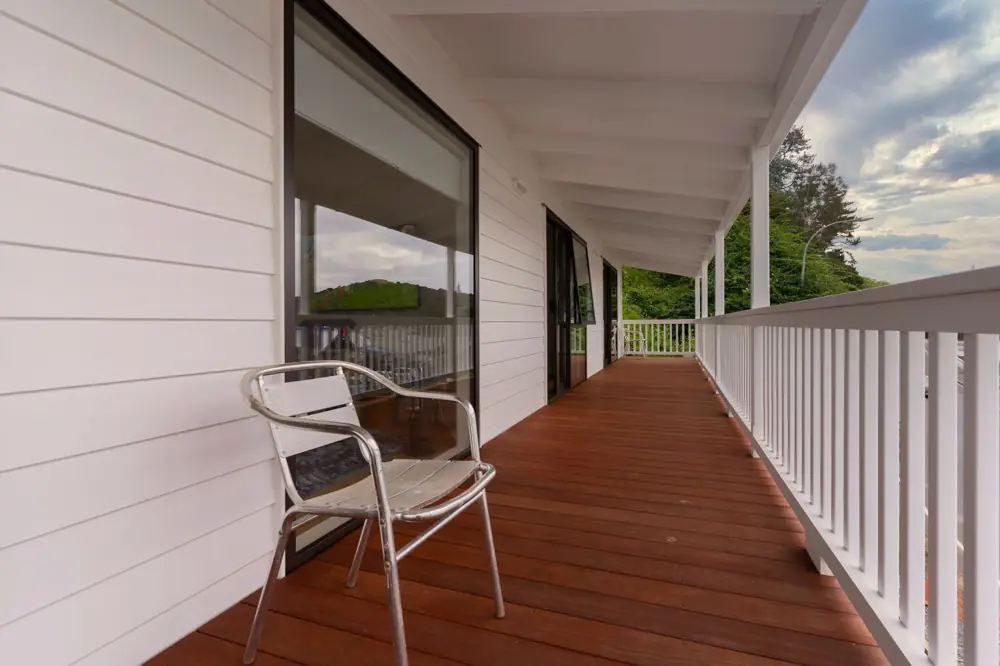
The surfaces Seattle decks run:
| Option | Description | Best For | Cost Level |
|---|---|---|---|
| Pressure-treated wood | The budget classic | Price-first builds | $20-30/sq ft |
| Cedar | The regional premium wood | The natural Northwest look | $28-40/sq ft |
| Capped composite | Low-maintenance core | The rain-smart choice | $30-45/sq ft |
| PVC boards | Full polymer, wood-free | Wettest exposures | $45-60/sq ft |
The maintenance appetite and the budget pick the board.
Three Realistic Project Scenarios
The wood budget deck — $6,000–$12,000
300 sq ft pressure-treated.
- Frame and boards — $4,500–$9,000
- Rails and stairs — $1,500–$3,000
Why this matters: The entry build the sealing calendar accepts.
The cedar upgrade — $8,400–$14,400
300 sq ft cedar deck.
- Cedar package — $6,400–$11,000
- Rails and stairs — $2,000–$3,400
Why this matters: The Northwest look the annual oil keeps.
The composite rain deck — $9,600–$18,000
300 sq ft capped composite.
- Composite package — $7,100–$13,500
- Rails and stairs — $2,500–$4,500
Why this matters: The surface the rain and the decade both respect.
The install gap the decade the maintenance the narrows.
Sample Budget Breakdown
The table below shows how a typical mid-range budget for composite deck vs wood deck cost comparison seattle washington distributes across materials, labor and compliance in the United States. Adjust the percentages to your own scope before using it as a savings target.
| Category | Estimated Amount | Explanation | Optimization Tip |
|---|---|---|---|
| Wood 300 sq ft | $6,000–$12,000 | installed | Sealing $400-700 every 1-2 years |
| Composite 300 sq ft | $9,600–$18,000 | installed | Wash it, done |
| Decade maintenance | $3,000–$6,000 | wood total | The gap composite install pricing closes |
Every figure above is an indicative 2026 market range. Final quotes move with site conditions, contractor availability and the exact specification you lock in.
From Quote to Completion: the Typical Timeline
Most composite deck vs wood deck cost comparison seattle washington projects follow the same five-stage rhythm. Knowing the calendar before you sign prevents the two classic frustrations — feeling rushed into a deposit, and being surprised by a mid-project gap while materials arrive.
- Week 1-2: excavation and base — The dig depth, the aggregate lift, and the compaction passes the freeze-thaw survival runs on.
- Permit where required: 1-3 weeks — The zoning setback and the impervious-coverage checks some municipalities run on new flatwork.
- Build: 2-5 days — Poured or paver — the surface placement the crew sizes the patio by; most residential patios finish inside a week.
- Seal and furnish: 1-2 weeks — The sealing the surface wants and the furniture the first season delivers.
- Week 0: layout and quotes — The furniture-driven dimensions and the three itemized quotes; the chalk outline the reality check runs.
Smart Ways to Control the Budget
Cost control on composite deck vs wood deck cost comparison seattle washington is mostly about scope discipline and timing. These are the strategies that consistently deliver the largest savings:
Match the surface to the climate
Freeze markets want air-entrained concrete and polymeric paver sand; the climate-specific spec the local installer already knows.
Advantages:
- Directly reduces the controllable parts of the quote
- No impact on quality or compliance when scoped correctly
Disadvantages:
- The wrong material ships fine — it fails on the third winter.
- Requires planning lead-time you may not have on urgent timelines
Bundle the patio with the landscape reno
Patios, retaining walls, and drainage share the excavation and mobilization; the combined project prices 10-15% under sequential ones.
Advantages:
- Directly reduces the controllable parts of the quote
- No impact on quality or compliance when scoped correctly
Disadvantages:
- One bigger scope to plan instead of two smaller ones.
- Requires planning lead-time you may not have on urgent timelines
Size the patio to the furniture, not the lot
A dining set plus circulation wants 12×14 feet minimum; the oversized slab the guesswork builds pays for square footage nobody uses.
Advantages:
- Directly reduces the controllable parts of the quote
- No impact on quality or compliance when scoped correctly
Disadvantages:
- Chalk the outline first — the test the tape measure runs.
- Requires planning lead-time you may not have on urgent timelines
Check the drainage slope before the pour
Patios need the 1-2% fall away from the house; the re-slope retrofit the missing quarter-inch demands costs 10x the original grading.
Advantages:
- Directly reduces the controllable parts of the quote
- No impact on quality or compliance when scoped correctly
Disadvantages:
- The slope conversation happens before the concrete truck, or never.
- Requires planning lead-time you may not have on urgent timelines
Permits, Rules and Safety
Seattle requires permits for decks over 30 inches height — structural drawings and guard details included.
- Setback rules govern patio edges near property lines; the variance the setback violation forces prices in weeks and fees.
- Retaining walls over 3-4 feet want engineering review in most jurisdictions — the stamped drawings the permit desk requires.
- Impervious-coverage caps bind some lots — the zoning math the new patio has to pass.
Maintenance and Long-Term Ownership Costs
The project price is only the first line of the budget. These recurring items are what owners in the United States actually spend money on after the crews leave:
| Task | Frequency | Typical Cost | Why It Matters |
|---|---|---|---|
| Slope and drainage check | Yearly | Free | The settling the ponding reveals; the shim the early catch prices cheap. |
| Paver reset of lifted units | Every 3-5 years | $200-$500 | The freeze-lifted units the reset levels; the trip hazard the wait creates. |
| Weed control at joints | Seasonal | Free to $100 | The seed the joint gap plants; the maintenance the sand top-up prevents. |
| Polymeric sand top-up | Every 2-4 years | $50-$150 | The paver joints the washout opens; the sand the ants and weeds refuse. |
Wood wants cleaning plus sealing every 1-2 years in the rain climate. Composite wants a yearly wash to keep moss off.
Frequently Asked Questions
How much does a deck cost in Seattle?
Wood runs $20-$40 and composite $30-$60 per square foot installed in 2026. A 300 sq ft deck totals $6,000-$18,000.
Is composite worth it in Seattle rain?
Yes — wood here needs sealing every 1-2 years. Over a decade the maintenance closes most of the composite premium.
How long do decks last in Seattle?
Composite 25-30 years, cedar 15-20 maintained, pressure-treated 10-15 in the rain climate.
Does moss grow on composite decking?
Slower than on wood — capped composite resists it. A yearly wash keeps what does grow off.
Summary
Planning composite deck vs wood deck cost comparison seattle washington in the United States starts with an honest range — $20–$60 for the scenarios most households actually install — then works backwards through material, climate, and maintenance arithmetic.
Seattle decking prices the rain — wood pays in maintenance, composite pays up front, and the decade breaks even. Collect at least three itemised quotes, confirm the permit path before signing, and hold a 10–15% contingency for site surprises. Those three habits protect more budget than any product choice.
Related Guides
- Deck vs Patio Cost Comparison Backyard Nashville Tennessee
- Swimming Pool Deck Resurfacing Cost Options Scottsdale Arizona
- Concrete Patio Stamping and Coloring Cost San Diego California
- Retaining Wall Cost Comparison Concrete Block Stone Pittsburgh Pennsylvania
- Retaining Wall Installation Cost Per Square Foot Seattle Slope
- Outdoor Kitchen Concrete Pad Cost Tampa Florida Backyard